Sunday, March 13, 2016

Idiopathic Intracranial Hypertension

Idiopathic Intracranial Hypertension

(Pseudotumor Cerebri)

December 17, 2009, updated February 2, 2010
Chief Complaint: Headaches and transient double vision for 6 months
History of Present Illness:
A 31-year-old obese female presented to her eye doctor with a history of headaches and transient visual obscurations for six months. She also reported a ringing sound in her ears for the past year that was synchronous with her pulse. On exam, she was noted to have bilateral optic disc edema. An MRI scan was performed and was normal except for an empty sella. The MR venogram was normal with no evidence of sinus thrombosis. She was diagnosed with idiopathic intracranial hypertension and referred to a neurologist for further workup and management. The neurologist performed a lumbar puncture which showed an elevated opening pressure of 50 cm H2O. The patient was started on acetazolamide (Diamox®) 500 mg twice a day and encouraged to lose weight.
The patient continued to have severe headaches after the lumbar puncture. One month later, she returned to her eye doctor for visual field testing. Humphrey perimetry was performed, and showed a mean deviation of -20.85 in the right eye with enlargement of the blind spot and a dense nasal field defect. In the left eye, the mean deviation was -20.35 and also showed enlargement of the blind spot and a dense nasal field defect. A repeat lumbar puncture was performed, which again showed an elevated opening pressure of 50-56 cm H2O. Her Diamox dosage was increased to 500 mg three times daily and she was subsequently was referred to the Neuro-ophthalmology Service at UIHC for further evaluation and management.
Past Ocular History: Prior eye examination at UIHC in 2000 was normal.
Past Medical History: Obesity and Depression.
Medications: Acetazolamide (Diamox®) 1500 mg daily, citalopram hydrobromide (Celexa®)
Family History: Non-contributory
Social History: Non-smoker, denies alcohol use
Review of Systems: She reports significant weight fluctuations over the last several months.
Physical Exam:
  • Visual Acuity
    • OD-- 20/20
    • OS-- 20/50
  • Extraocular motility: full OU, without diplopia
  • Pupils: 5 mm in the dark and 2 mm in the light; no relative afferent pupillary defect.
  • Intra-ocular pressure: 11 mmHg OD, 16 mmHg OS
  • Color vision testing normal in each eye.
  • She had normal cranial nerve V and VII function bilaterally.
  • External and slit lamp exam normal
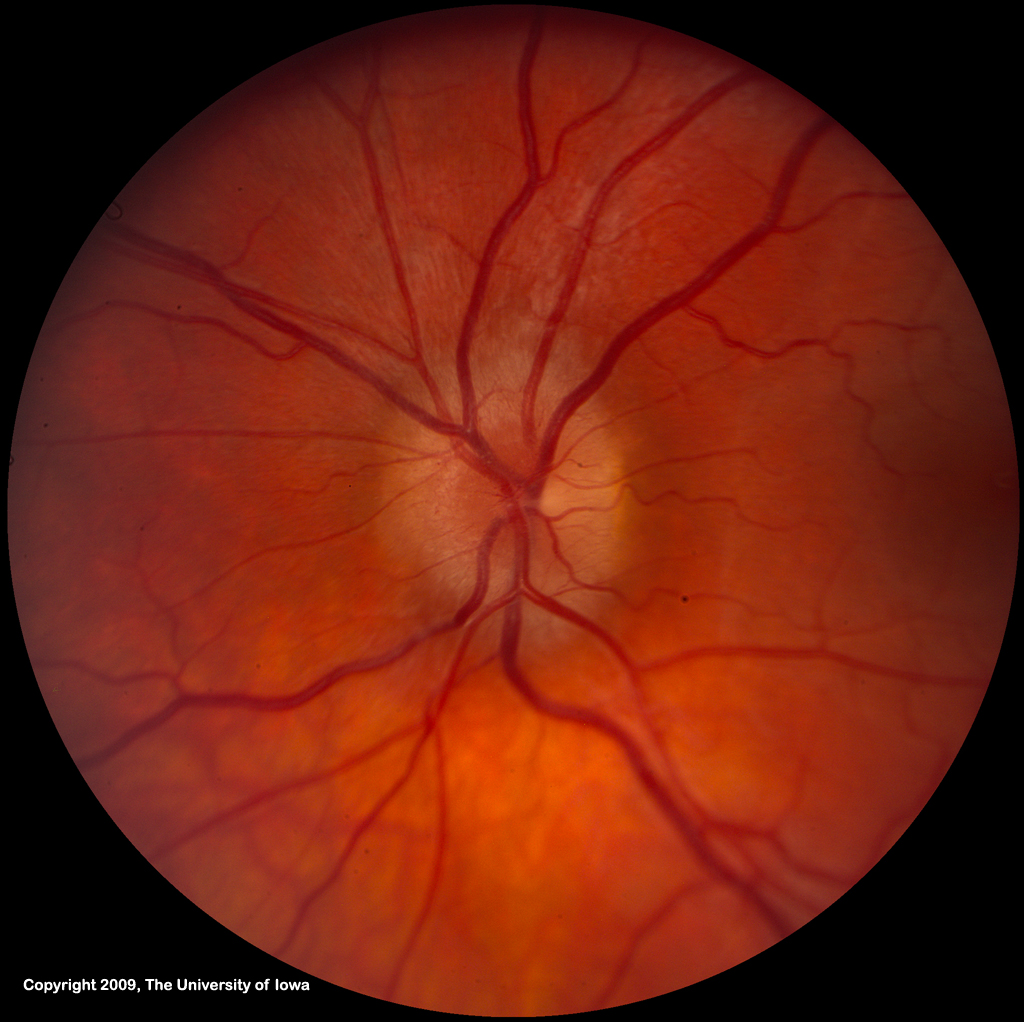
  • The patient had grade two papilledema. The macula, vessels and periphery in each eye were normal. (see figure 1)
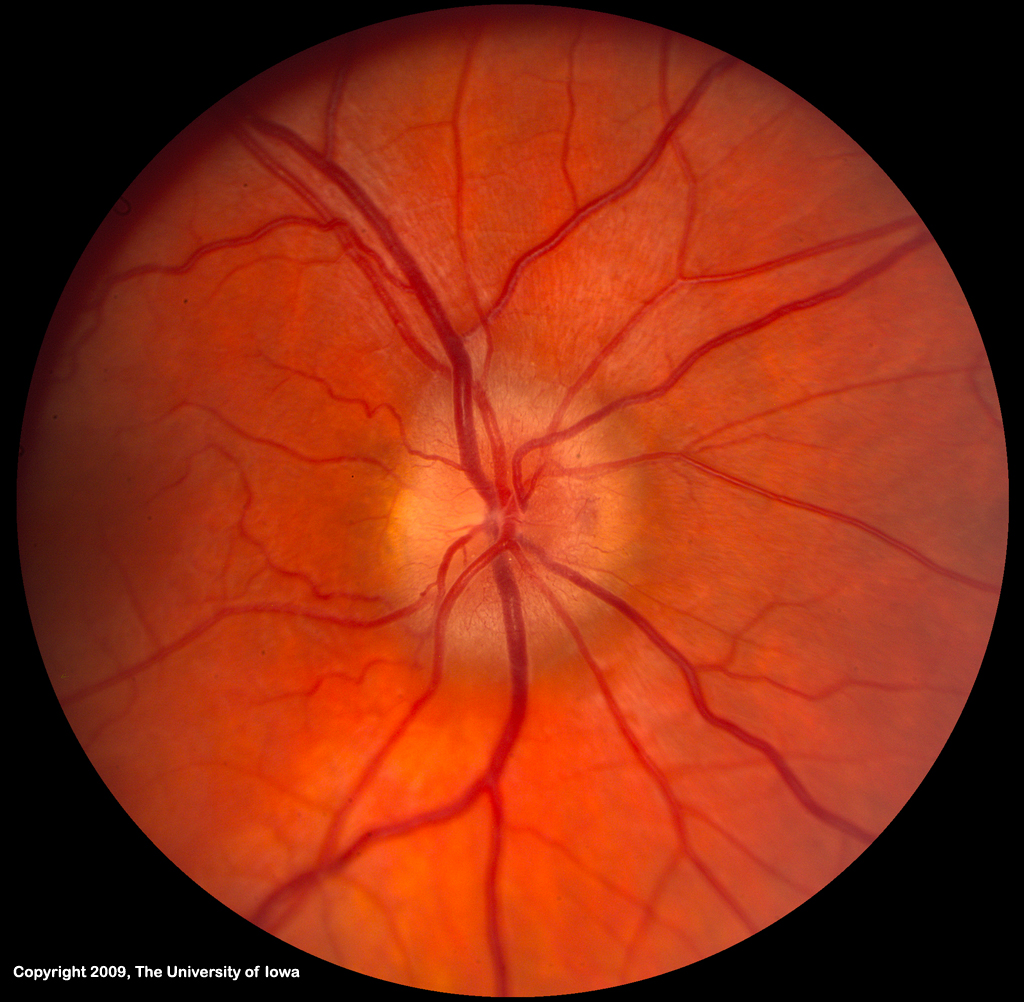
Figure 1. Bilateral optic disc edema at presentation, (12/07) Goldmann perimetry was performed at her initial visit (click on either image to enlarge)
optic disc edemaOptic disc edema
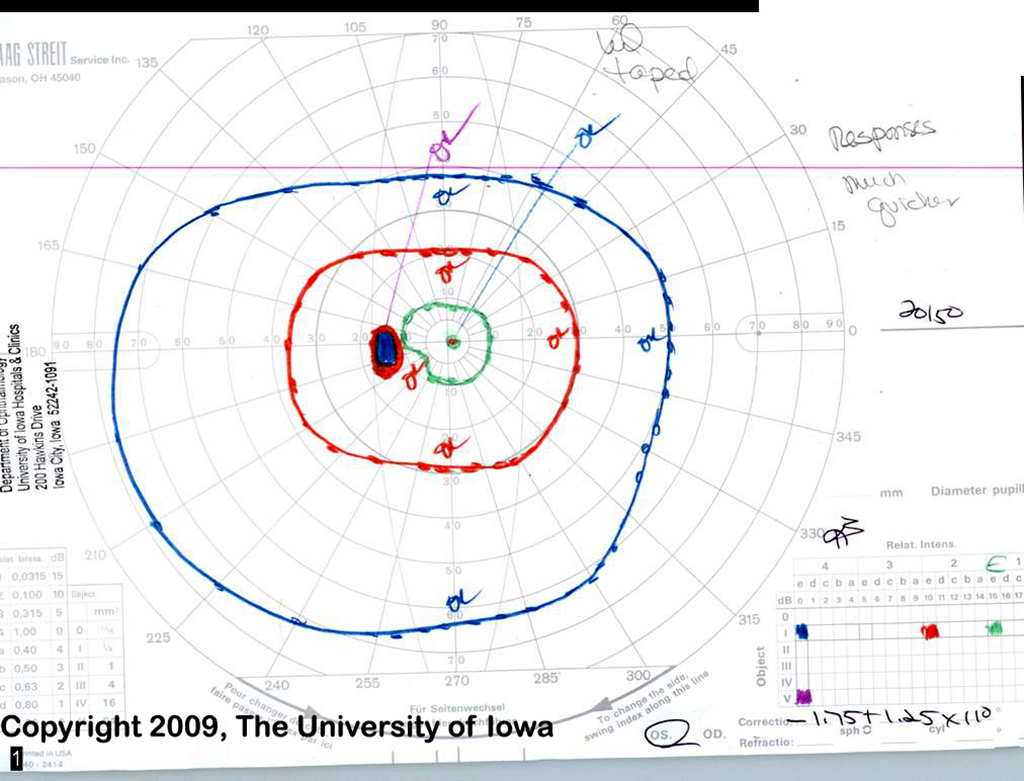
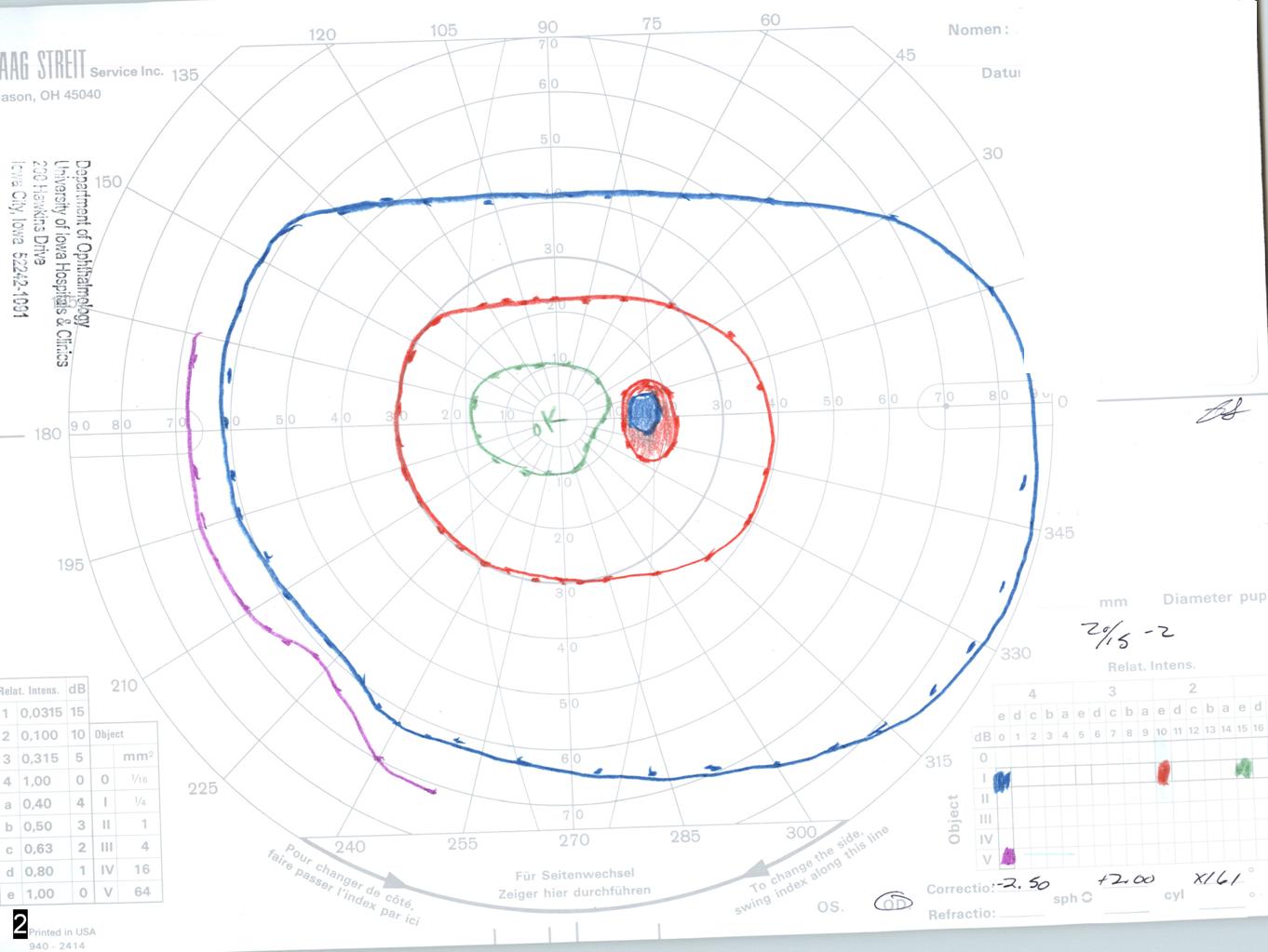
Figure 2. Goldmann visual field at presentation (12/07) -- (click on either image to enlarge)
Goldmann Visual FieldGoldmann Visual Field
The right eye field shows a markedly enlarged blind spot and some nasal constriction. The left eye field shoes a small paracentral scotoma to the 11e and 12e isopter, but full peripheral field. The patient reported having transient visual obscurations during testing of her left eye.
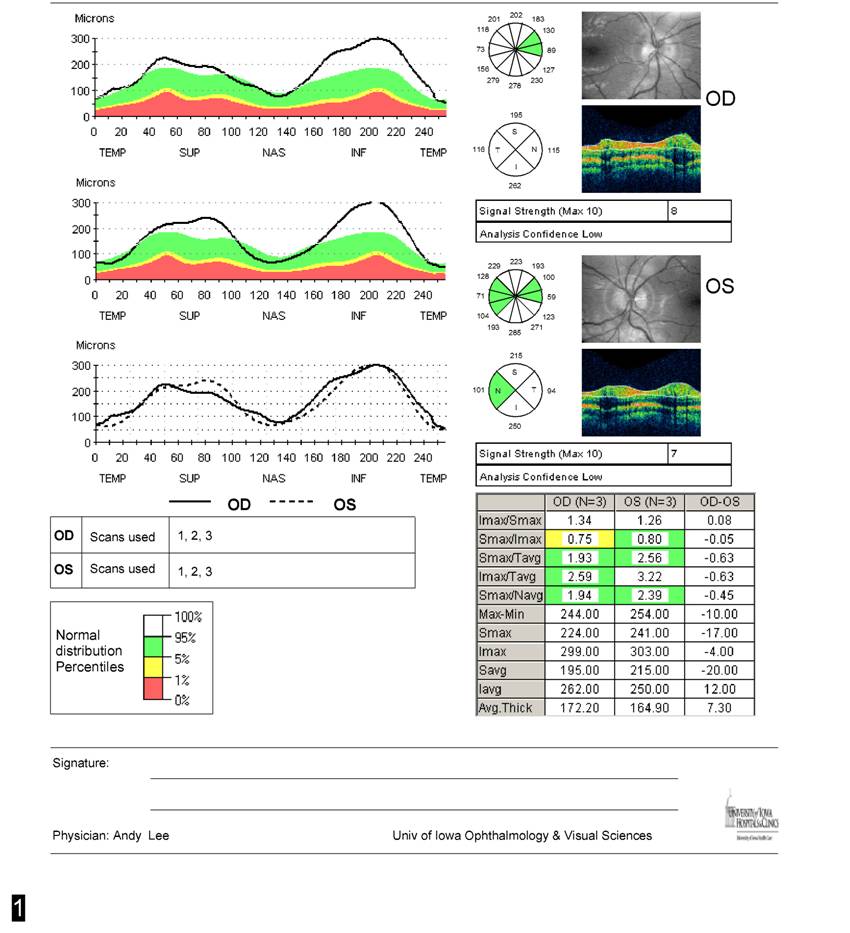
Figure 3. Optical coherence topography at presentation (12/07) demonstrates marked elevation of the retinal nerve fiber layer OU. (click on image for larger view)
OCT

Course

The patient's dose of Diamox was increased to 2 gm daily, given that she had papilledema, persistent headaches, transient visual obscurations and pulse synchronous tinnitus. When she returned two weeks later, she felt better. She had lost 5.5 pounds and her headaches had resolved. Her visual acuity was 20/20 OD and 20/25 OS and ophthalmoscopy showed residual grade I-II disc edema. Her Goldmann visual field had improved. She was kept on the same dose and returned for follow up, 2 months later.
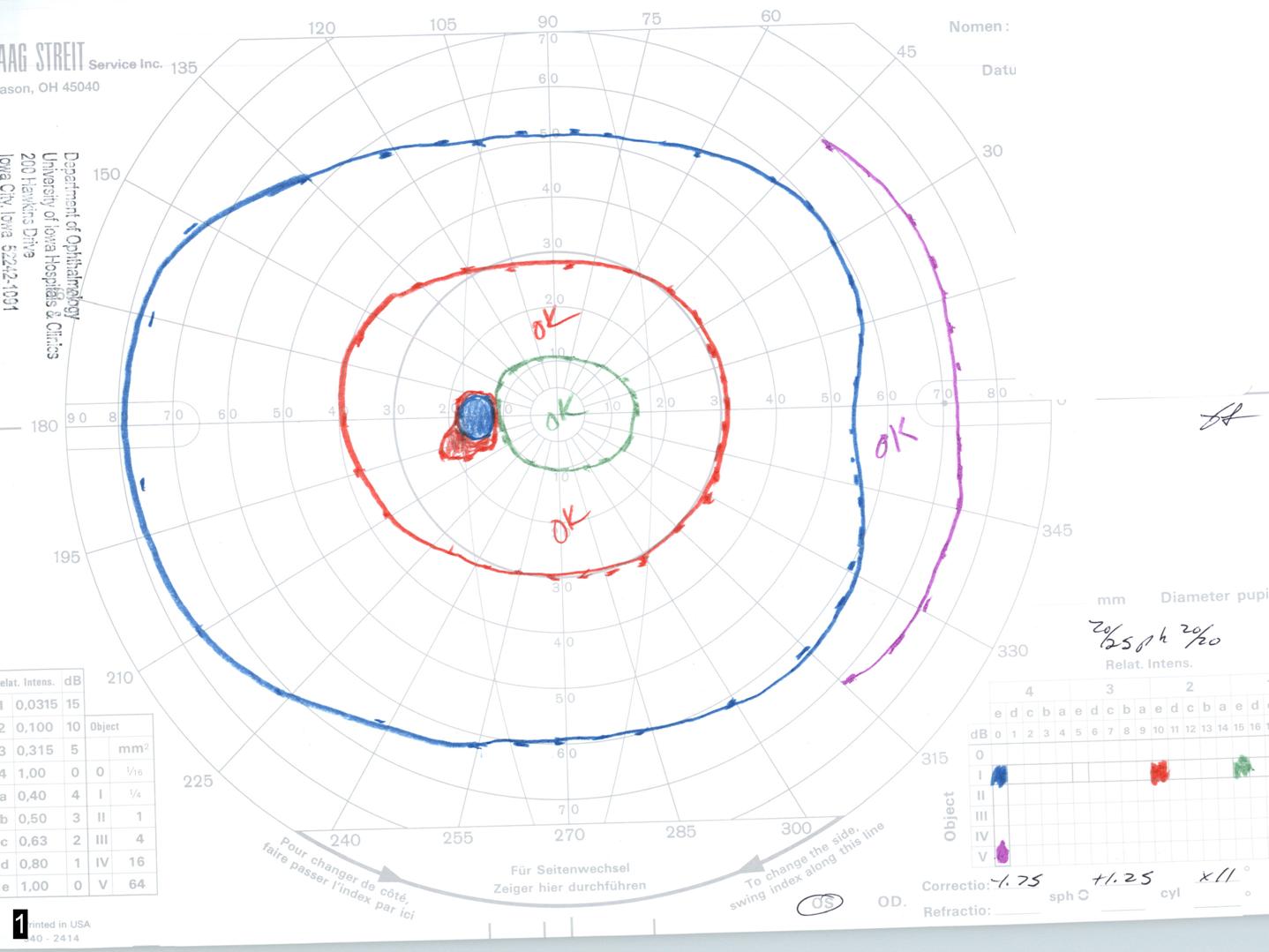
At her follow up appointment she reported only three headaches since her last exam. She had lost an additional 4.5 pounds for a total of 10 pounds of weight loss. Goldmann visual field showed a slight enlargement of the blind spot on the left greater than the right. The rest of the field was full. Her visual acuity was 20/15 OD and 20/25 OS and ophthalmoscopy showed grade I optic disc edema. (see figures 3 and 4)
She has since been doing well and her Diamox was tapered off without further complications. She continues to be followed by the neuro-ophthalmology clinic.
Figure 4. Optic disc edema improved, (3/08) -- (click on either image to enlarge)
Improved Optic disc edemaOptic disc edema improved
Figure 5. Goldmann visual fields are much improved from prior, with normalization of blind spot size and disappearance of the paracentral scotoma in the right eye (3/08) -- (click on either image to enlarge)
Goldmann Visual FieldGoldmann Visual Field
Discussion
Idiopathic Intracranial Hypertension (IIH) is a condition in which the cerebrospinal fluid (CSF) is under high pressure in the absence of an intracranial mass, venous sinus thrombosis or other primary cause (see differential diagnosis). It is also known as pseudotumor cerebri because patients present with signs and symptoms of a brain tumor without a brain tumor being present.
Pathophysiology
In IIH, there is no structural obstruction to the circulation of CSF. It is believed that the problem lies in defective reabsorption of CSF either at the level of the arachnoid granulations or along cranial and spinal nerve root sheaths. There is no evidence for excessive CSF production.
There is a female preponderance for this disease, and the peak age of onset is in the third decade of life. It is common for affected patients to be obese, and weight loss is an important part of treatment. IIH symptoms often start or worsen during a period of weight gain and resolve with 5-10% total weight loss. The disease is rare in thin men. This has led some researchers to look for an association with hormonal changes within the body, but to date no consistent associations have been found. The disease has been associated with withdrawal from steroids, and with the use of exogenous substances like vitamin A, tetracyclines, and oral contraceptives.
Although no associated conditions besides recent weight gain are usually found, many conditions have been linked to high intracranial pressure. Any disorder that blocks the flow of spinal fluid between the brain and the jugular venous system can cause raised pressure. For example, scarring of the arachnoid granulations by meningitis can cause raised intracranial pressure. Similarly, blood clots in the veins draining the brain can cause increased intracranial pressure. These conditions can mimic IIH.

Symptoms and Signs

IIH presents with symptoms and signs of elevated intracranial pressure. Headache is the most common symptom. The headache may be aggravated by changes in position. There may be a ringing or a "whooshing" sound in the ear synchronous with the patients pulse. A patient may experience double vision. Momentary loss of vision known as "transient obscurations of vision" are common; they may occur in one or both eyes and usually last seconds but rarely longer than one minute. Other visual symptoms are dimming of vision, or loss of peripheral vision in one or both eyes. The visual loss may be mild to severe. If severe and untreated, the disease can result in permanent vision loss.

A prospective study conducted by Wall and George demonstrated the following incidence of symptoms

  • headache (94%)
  • transient visual obscurations or blurring (68%)
  • pulse synchronous tinnitus or "whooshing noise" in the ear (58%)
  • pain behind the eye (44%)
  • double vision (38%)
  • visual loss (30%)
Over 90% of patients in this study had visual loss documented by perimetry (Wall and George, 1991).
On examination, papilledema (bilateral optic disc edema) is nearly always present. This may be accompanied by a serous retinal detachment and choroidal folds if the intracranial pressure is excessively high. (see images of Grades I-V papilledema)
Images of Grades I-V papilledema (click on image for details)
click on image for detailclick on image for detailclick on image for detailclick on image for detailclick on image for detail

Diagnosis

First, imaging studies of the patient's head (via magnetic resonance imaging or computed tomography) must be normal except for the signs of raised intracranial pressure (empty sella, flattened globes, collapsed lateral sinus). Next, the cerebrospinal fluid pressure is measured by a lumbar puncture and the pressure must be elevated. The lumbar puncture should be performed with the patient in a supine position for most accurate measurement of the intracranial pressure. Laboratory studies on the cerebrospinal fluid must be normal. All of the above criteria (the Modified Dandy Criteria, see table) must be met in order to diagnose IIH.
Clinical Definition of IIH" (Modified Dandy Criteria)
  • Signs and symptoms of increased intracranial pressure
  • No localizing neurologic findings (Cranial nerve VI palsies are allowed)
  • Normal neuroimaging (with the exception of an empty sella)
  • Opening pressure of lumbar puncture of greater than 250 mm water, with normal CSF
  • No other cause of increased intracranial pressure present

Treatment

A variety of treatments for IIH have been proposed and there is much anecdotal evidence for these treatments. There is no evidence-based data currently available but an NIH sponsored clinical treatment trial is beginning in 2009. Patients with no visual loss or mild visual loss are treated medically.
Weight loss is an important part of treatment and is always recommended. Most patients improve after losing 5-10% of their total body weight. It appears that in addition to weight reduction, sodium restriction is also a useful adjunct. We recommend that patients lose about one pound a week for several months and then maintain the weight loss. The mechanism of the beneficial effect of weight loss on this disease is unclear but there are parallels with the beneficial effect of weight loss and sodium restriction for treatment of essential hypertension.
For patients requiring medical therapy, acetazolamide (Diamox®) is the most commonly used medication. It is relatively safe but nearly all patients experience the side effect of paresthesias, or numbness and tingling in the extremities. Patients also report an alteration in taste such that carbonated soft drinks taste metallic. Less commonly, kidney stones can occur. Another diuretic commonly used that appears to be effective in some patients is furosemide (Lasix®). Topiramate (Topamax®) is used for migraine prophylaxis and has been found to be effective in the treatment of headaches associated with IIH.
Intractable headache or progression of visual loss despite maximal medical treatment requires surgical therapy. The primary surgical options are optic nerve sheath fenestration or a CSF diversion procedure (shunt). Optic nerve sheath fenestration involves the creation of a window in the sheath-like covering of the optic nerve. This creates an outlet for escape of cerebrospinal fluid and alleviates the direct pressure on the optic nerve. Later, the area around the nerve within the nerve sheath scars down further protecting the optic disc from damage.
Placement of a shunt (lumboperitoneal or ventriculoperitoneal) is another surgical treatment option. The device diverts cerebrospinal fluid to the abdomen or into the jugular vein (ventriculojugular). Both types of surgeries have their own risks and benefits and unfortunately about 50% of shunts fail at some point.
Figure 6: Treatment strategy for IIH. Other medications that can be used are topiramate and furosemide. With severe visual loss, surgery can be done immediately or after a short medical trial. Steroids can be used to lower pressure while the patient is awaiting a CSF shunting procedure.
Figure 11, treatment diagram
Diagnosis: Idiopathic Intracranial Hypertension (Pseudotumor cerebri)

Differential Diagnosis

Highly Likely

    • Decrease flow through arachnoid granulations
    • Scarring from previous inflammation (meningitis, sequel to subarachnoid hemorrhage)
    • Obstruction to venous drainage
    • Venous sinus thrombosis
    • Hypercoagulable states
    • Contiguous infection
    • Bilateral radial neck dissections
    • Superior vena cava syndrome
    • Increased right heart pressure
  • Endocrine Disorders
    • Addison's disease
    • Hypoparathyroidism
    • Obesity
    • Steroid withdrawal
  • Nutritional Disorders
    • Hypervitaminosis A (vitamin, liver, or isotretinoin intake)
    • Hyperalimentation in deprivation dwarfism
  • Arteriovenous malformations
  • Obstructive Sleep Apnea

Probable causes

  • Anabolic steroids
  • Kepone
  • Ketoprofen or Indomethacin
  • Systemic Lupus erythematous
  • Thyroid replacement therapy in hypothyroid children
  • Uremia

Possible causes

  • Amiodarone
  • Diphenylhydantoin
  • Iron-deficiency anemia
  • Lithium carbonate
  • Nalidixic acid
  • Sarcoidosis
  • Sulfa antibiotics

EPIDEMIOLOGY

  • Female: Male ratio 9:1
  • Incidence peaks in 3rd decade
  • Associated with obesity
  • Less common in children and lean males

SIGNS

  • Increased intracranial pressure
  • Papilledema
  • MRI of the brain normal except empty sella, globe flattening and collapsed lateral sinus
  • Opening pressure of lumbar puncture of greater than 250 mm water, with normal CSF composition (> 200 by some authors)

SYMPTOMS

  • Headache (94%)
  • Transient visual obscurations or blurring (68%)
  • Pulse synchronous tinnitus or "whooshing noise" in the ear (58%)
  • Pain behind the eye (44%)
  • Double vision (38%)
  • Visual loss (30%)
  • Pain with eye movement (22%)

TREATMENT

  • Weight loss with sodium reduction
  • Acetazolamide (e.g., Diamox 250 mg p.o., QID initially, building up to 500 mg QID, or up to 4 g a day if tolerated)
  • Discontinuation of causative medication

My Christmas present was an IIH diagnosis....

My Christmas present was an IIH diagnosis....
Hello! After browsing other IIH groups (mainly FB ones), I feel more comfortable here......
Went to my ENT with wooshing sound in right ear July-ish of 2014. I was worried I was going deaf in my ear (hello concerts and listening to loud music in my 20's!). Hearing is fine, but sent for MRI. MRI shows Optic Nerve swelling. Refers me to a specific Ophthalmologist who is so busy, her team tells me there's a 4-5 month waiting list.
I finally see her in December 2014. Go through the gambit of tests for 4 hours. Confirms that I do have significant swelling. Wants me to see Neurologist and Endocrinologist that week and wants an LP and MRI done right away.
Long story short....all of this is done week before/of Christmas. LP showed I had a pressure of 50. So, I'm put on Diamox right away....stair step to my current 1500mg/day dosage.
I do have headaches, but they tend to be very sporadic. My problem was the annoying swooshing that sounded like someone screaming in my ear. It now has lowered significantly in sound. Retest of my vision shows some slight decrease in optic nerve swelling.
They want me to exercise and lose weight. Despite diet and exercise, I put on 30 lbs this year after getting Mirena put in at the beginning of 2014. They think this might have been a factor. So, I got it removed.
So, I'm on the 1500mg/day of diamox. I'm drinking coconut water to get my potassium up. The tingles don't bother me too much, and I don't drink soda to care if it tastes bad. However, I'M SO DARNED TIRED!!! Does this eventually pass? If I'm to stay away from caffeine AND exercise, but the meds make me tired - it's fighting a losing battle.
Any tried and true measures or tips?
Best
Write a comment
BoldChoices
422d, 4h
For me the first few weeks on the diamox really were horrible. I was tired all the time along with a multitude of the other side effects. I was diagnosed in late July or early August. I just had my check-up the end of December and while there is still some pressure on the optic nerve the doctors felt things were looking good.
I still have the whoshing sound in my ears though is is not as loud and no longer constant. I did lose about 25 lbs, the first 15 were because the diamox made me nauseated. My doctor said that in his opinion weight loss is one of the major contributors to getting rid of IIH. I've got a long, long way to go in that area.
I've found that staying hydrated is key to feeling less tired and reducing the side effects. I too have been working to increase potassium and reduce sodium intake. I have a banana and 6-10 dried apricots everyday and try to get other potassium rich foods in my diet.
Hang in there and keep working at the things you need to do. I figure a change in lifestyle like adding exercise and eating better is worth not losing my sight.
1
BellaFiat
421d, 18h
Thank you - and I agree about the exercise. I will try to add some apricots. I drink coconut water, which helps, but am looking for other foods to help supplement.
1
skidizzle
421d, 23h
How long have you been on diamox? The first few weeks I was on it I was pretty much useless, I could barely get out of bed. I lost 20kg purely through watching what I ate and my pain reduced greatly. I stopped getting headaches after about a year but the wooshing stuck around for a while after that. It has been three years since my diagnosis and my neurologist has just told me that my eyes look completely normal now.
1
BellaFiat
421d, 18h
They started me with 500mg/ Day on Christmas, upped it to 1,000 mg/day last Thursday (1/8/2015), and had my vision rechecked. Swelling went down some but he wants it down fast - so he upped it to 1,500mg/day effective Tuesday this week (1/13/2015).
I have crossfitted/weight lifted for the past 2 years. I used to always feel better AFTER I worked out. I figured yesterday, I'd push myself through the exhaustion to go lift some weights. Yeah....I didn't count on being dizzy. I am just wondering with the large increases in short about of time - my body isn't used to it yet.
1
skidizzle
421d, 10h
Yeah I would say your body has to adjust every time they increase your dose. I was put on 500mg for a week then upped to 1000mg. It probably took about a month from when I first started the medication for my energy levels to go back to normal.
1
GirlnTheOtherRm
421d, 22h
I have to say be careful of the FB groups, especially if you're empathetic as I took on many a symptom of others while in them... Once I left & stopped reading all the bad things that were happening, I got a lot better.
I have a tumblr : IIH-and-me.tumblr.com & if you scroll back far enough (past the words of encouragement & the like) you'll find a lot of good info on what foods to avoid to make things better, meds that are ok, and a bunch of other stuff... Sorry, I've been awake for 19 hours & I'm a bit tired.
Hope your positive journey continues & that with the weight loss your symptoms dissipate.
1
BellaFiat
421d, 18h
Thank you - and yes, I am an empathetic person. It has made me very concerned because everybody seems so miserable and complains. Any time I ask for input/advice, it would get shot down immediately with negativity.
I will check out your tumblr. Sounds like a great resource!
1
GirlnTheOtherRm
420d, 22h
It is a lot of that & it really pulled me down. I try to keep it light, I've got a good group of IIH friends on tumblr & we all try to uplift each other as we all know how shitty this thing can be.
1

Chronic knee pain from diamox? Suggestions

Chronic knee pain from diamox? Suggestions

Hi everyone! I'm new. Desperately seekin answers to side effects, I currently have unbearable knee pain that has been getting progressively worse over the last 3 months. I've been on 750mg's a day of diamox for 6 months.
I used to run marathons, my last was only 9 months ago, at the time I was doing
jump squats, Burpees, running etc. Now, I can't even get out of a chair unassisted. Initially I thought it was my doing, so I seen my physio and chiro

and both of them were slightly perplexed as my knee seems in good form. He was treating me for what he could only sum up a patillar tendonitis. After 2 months of that and zero improvement I strayed researching the side effects and came to realize that diamox might be to blame.
Has anyone had this problem? What did your doctor suggest ? I've considered take potassium and magnesium supp. But don't want to waste money.
I'm honestly in tears over this. I'm a stay at home mom, and in the evenings a full time university student and janitor. I need my legs... And my children need their active mommy back Sad
Please offer suggestions if you have them. Even if you feel they're minuscule.
Thank you!
---------------------

DBS
DBS
I'm an Advocate
2 years ago

Group Leader7 years on site1097 posts
Are your doctors watching your potassium levels? Diamox and other meds used to treat IH can cause low potassium, and it isn't a good idea to take OTC supplements. Low potassium can cause more than just joint/muscle pain. It can affect your heart and other organs, so it is critical to have your doctor do a blood panel, and if it is low, you need prescription strength treatment.Also, low levels of vitamin D, and being low in B12 can cause some of what you are describing. These too are easily treatable with prescribed supplements.
It is interesting to note that there are many with IH who were also diagnosed with fibromyalgia. Now, whether there is a connection to IH or not, I don't know. And, it could be just the Diamox causing issues.
I know it is frustrating, but if it were me, I would set up an appointment to get your blood checked for the things mentioned above. I take 120 meq of potassium to stay in the normal range, and mine got VERY low before I took action.
In the meantime, you can eat foods high in potassium, such as a baked potato which has 950 mg. Orange juice is good as well, but if your levels are low, it will be difficult to eat enough to get the levels back up.
I hope this helps.

DBS
DBS
I'm an Advocate
2 years ago

Group Leader7 years on site1097 posts
Oh, and Welcome to our group!! Wink

Willowacres
Willowacres
2 years ago

New Member2 years on site3 posts
Thank you so much Babby:SmileHealthcare in My town is exhausting right now, so Seeing any doctor at all will take a while.
It's hard to lose weight when eating high potassium foods, for me anyway. Oh what a tangled web we weave.
Thanks again Babby!

DBS
I'm an Advocate
2 years ago

Group Leader7 years on site1097 posts
If you continue to feel this, or any other body pain, or weird heart rate issues, go to the ER and see if they can do a blood draw. Low potassium is really nothing to mess with. My Mom was just hospitalized for 4 days due to this, and they had to do IV and oral supplements. Not trying to scare you, but it can be very serious.And you are welcome.

Willowacres
Willowacres
2 years ago

New Member2 years on site3 posts
I was able to have a good visit with my pharmacist and he thinks it might me Uric acid build up in my knees. He thinks this because I took myself off diamox for a few days and my knees were better, but obviously had to go back on because my pressure was building again... He said if it was a potassium problem my knees wouldn't have felt better so fast, which makes him think it's Uric acid. He gave me foods to avoid but I think I'm going to attempt the elimination diet for a few weeks, (weightloss would be a bonus)I'm really wanting to get pregnant in the spring of 2014. My edema on my optic nerve is almost gone, and I fortunately only suffered vision problems and ear pressure from IIH, not many other side effects.
No one has told me what my next step is once my papiliedema is gone... Do they typically take you of the medication at that time?
Thanks Smile feels so good to finally be writing on this site instead of just reading it. I've been reading on this site for months now haha

DBS
DBS
I'm an Advocate
2 years ago

Group Leader7 years on site1097 posts
I'm so glad you talked to someone.Going off of the meds just because your pap is gone is a decision for you and your doctor. I've never had much swelling at all, just at the beginning, but when they tried to take me off of Diamox, my head got much worse. My biggest complaint has always been daily headaches and neck pain, along with the pulsing and wooshing noise in my ears.
Each of us is different, so it depends on how you feel overall. Having your pap reduced could just mean the medicine is doing it's job, and going off could put you at risk of it returning, so if you do go off, it would be important to keep close tabs on your vision, and keeping up with exams.
Much of having IH is managing it, and that can be a full time job. Smile